On champagne, ordinary Tuesdays, and the joy already in your day
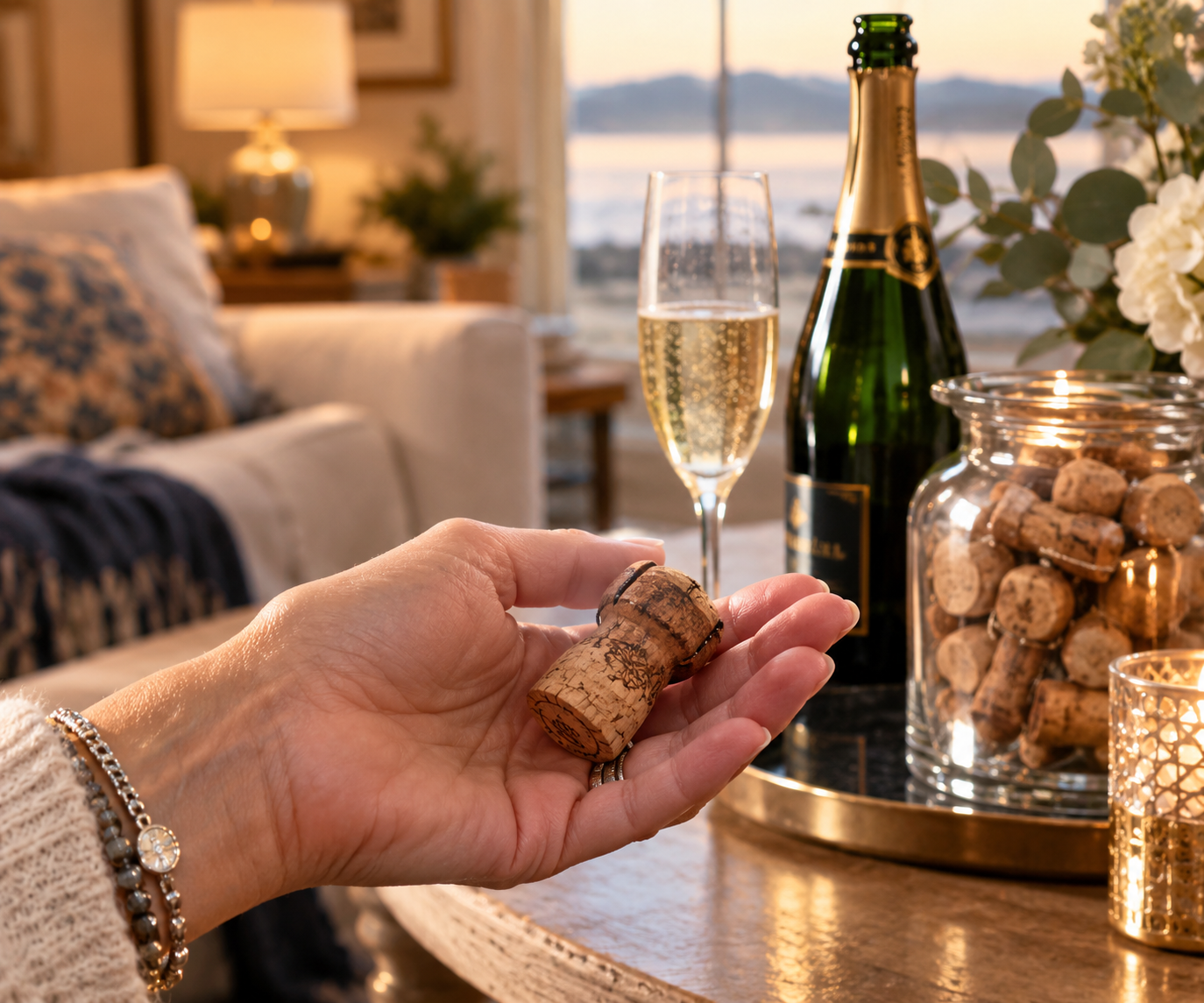
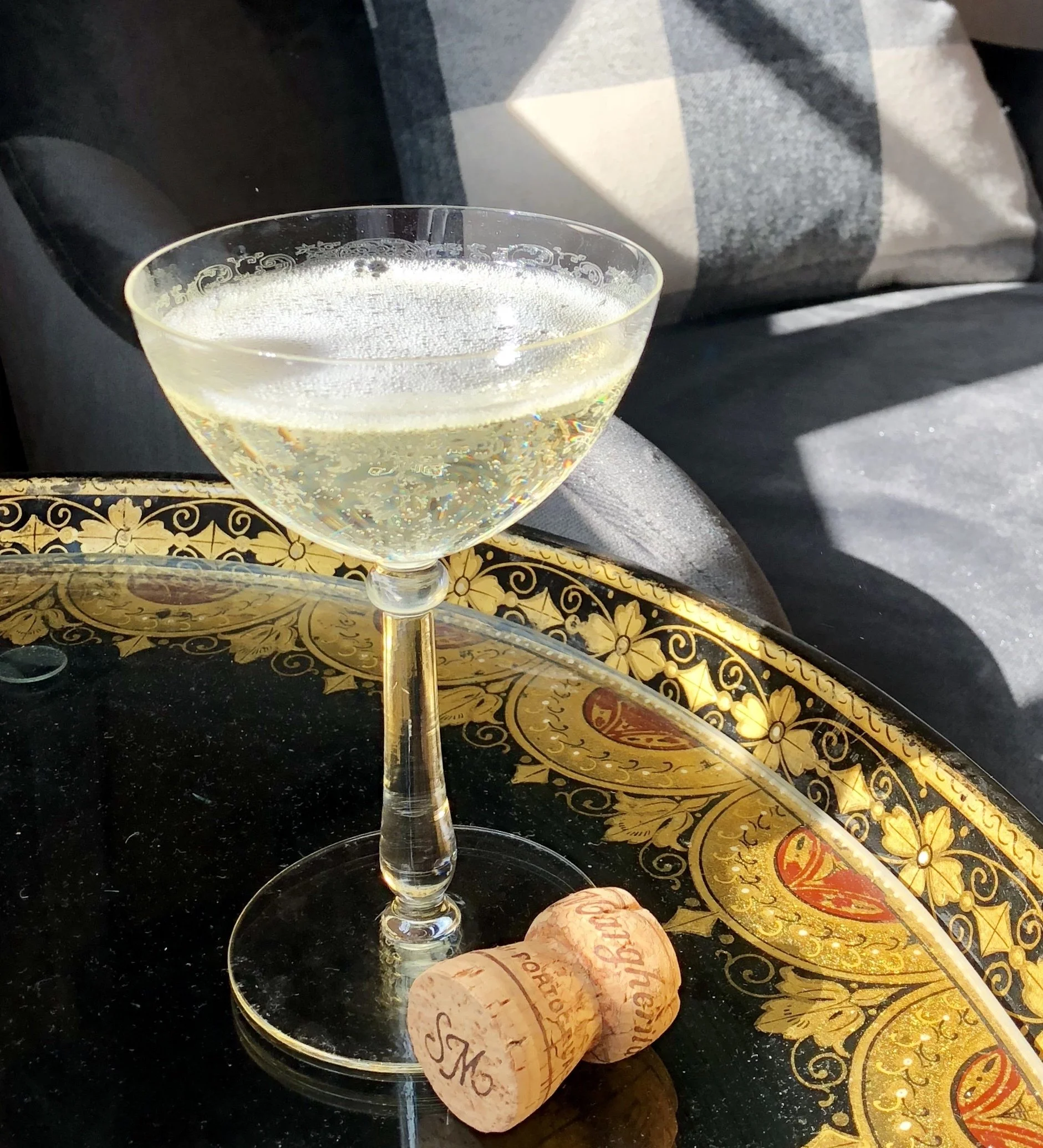
I'm wiping the counter after popping a bottle earlier, and I can never get the bloody thing properly shiny, there's always a streak somewhere. I grab the cork. My fingers trace its curve, its smoothness, and then, before I've decided anything, my hand cradles it, all fingers in, the way you'd close your hand around a fallen acorn, a feather off a branch, some small thing needing to be caught. A sudden inhale stretches my solar plexus, a small oh escapes me before I've caught up to why. I smile, then giggle at my own instinct. And in that same breath, a flash, all at once: my granddaughter searching under my spider plants for fairies. The skloop of my rubber boot pulling free on a muddy hike. A cow's flatulence sending me into ripples of laughter. I carry it, still cradled, to the bowl where it will be safe.
The bowl has been filling for years. Someone asked me once, why do you keep all the champagne corks? You don't keep the wine corks? I told her, because each one reminds me that I've had this many occasions where I stopped to celebrate. The bowl overflowed long ago, so now the corks travel: every woman who joins me on retreat goes home with one.
I was eighteen, on a study term here, the first time I understood any of this. The whole town shut down for two hours at lunch, which felt scandalous to me then, and our program manager took us to a small place with a menu that only existed that day. She ordered Kir Royales before we'd even sat down, and lifted her glass to nothing. Not a finished project, not a happy client. Just that the sun was out, and her favourite bakery was holding an apricot tart for her. I remember a flash of hope, close to vindication, that everything in me I'd learned to call silly, or naive, or too soft, might have been right all along. That my job might simply be to go looking for what was champagne-worthy, instead of forever trying to prove I was something extraordinary. For one instant, my body felt like the bubbles were already inside me, before I'd had a sip, like finding the secret map. I lost that map for a good twenty-five years. But I never stopped looking for it.
I woke up one morning in my early forties and thought it was simply gone, that I'd looked long enough and there was nothing left to find. I lay there not focusing on anything in particular, when I noticed the light. Sunbeams, and the dust caught inside them, drifting. Some uncensored part of my brain, the part that hadn't yet learned to talk itself out of things, wanted to know if that was magic. And I knew that it was. Not magic in the way you'd explain to a child, but magic in the way it actually is: ordinary, and right in front of you, the instant you stop to really look.
What happened today that was champagne-worthy? I ask it at every dinner and every retreat, and let the silence do its work. Each woman writes joie de vivre on her gifted cork and puts it in her pocket. Every morning after that, she takes it out and goes looking.
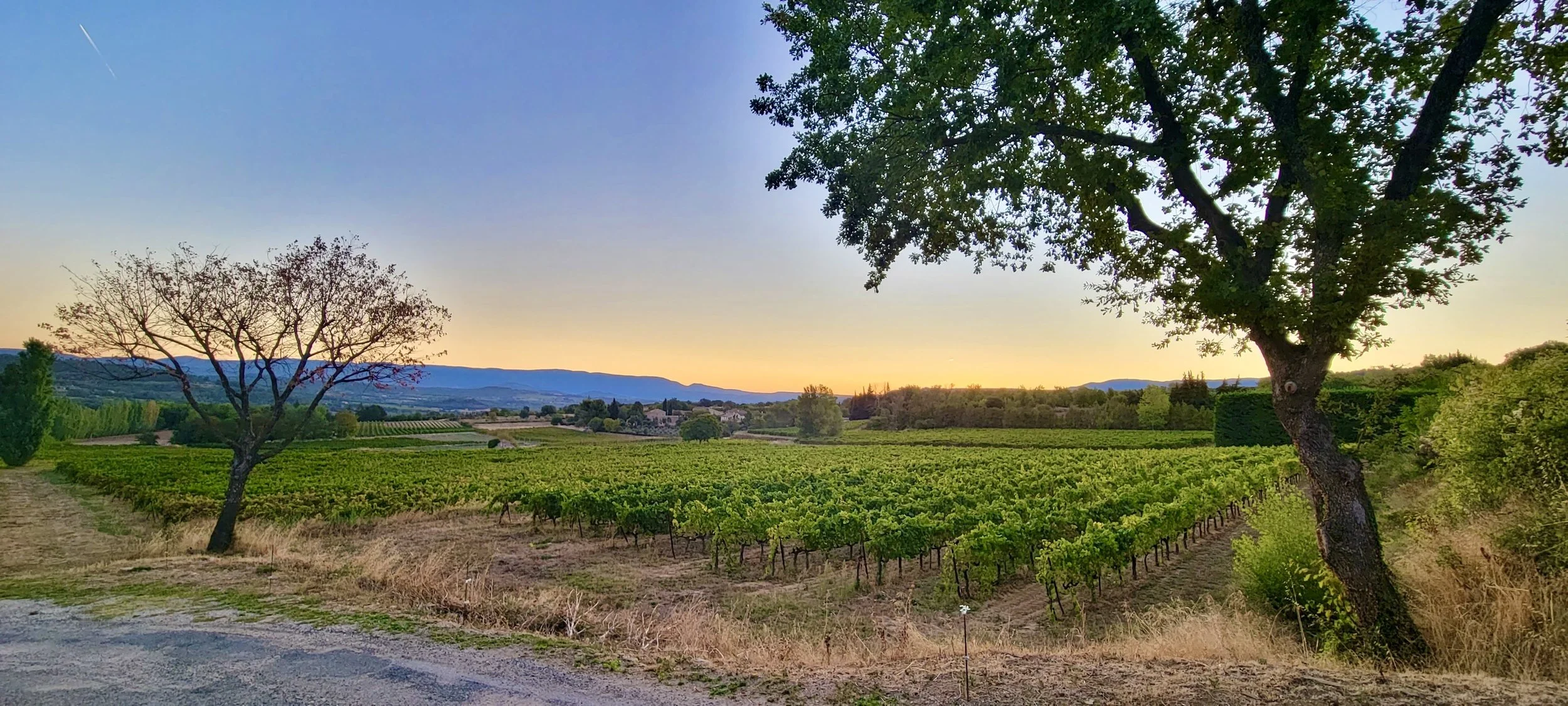
On the third day of one retreat, a woman told the group, almost bashfully, I go back for the same one every day, and I hope that's okay, and it feels kind of ridiculous, but closing my eyes under the olive trees at Mas Edem, telling them apart from the pines by scent alone, no looking, and feeling that the way we felt finger paint in kindergarten.
Heads around the room tilted, some with curiosity, some with recognition, like when you hear an echo and you're kind of surprised that it's your own voice. Her eyes dropped to the floor. And her chin lifted, with encouragement and defiance. For me, it began with a fig.
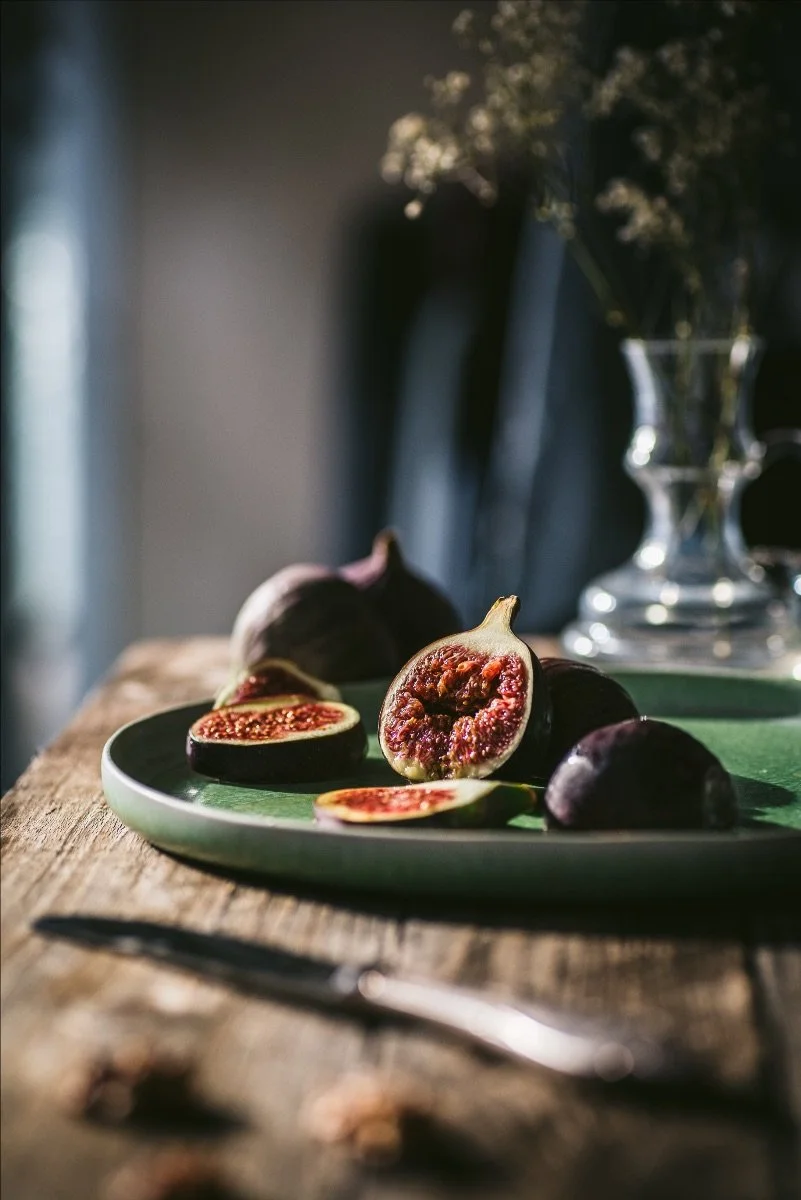
Years ago, long before there was a retreat, back when this was just the corner of Provence I loved and returned to, I stood beneath a tree and smelled it before I saw it, a distinct, earthy, sweet calling. It made me reach for one, and then I didn't know what to do. I'd never held a fig straight from the branch, never had to learn how to hold something so unfamiliar, how to persuade it apart into two halves without bruising it. When it opened, the colour startled me, that vibrant red against the dull skin, a whole orchid where I hadn't expected one. I'd never eaten a fig plucked fresh. I didn't know how delicious softness could taste on my tongue. I instinctively curved my lips to catch the juice and pulled the fig in a little further. I exclaimed, I purred, I took another bite. It has never tasted the same anywhere else, but any smell of it brings me right back, immediately.
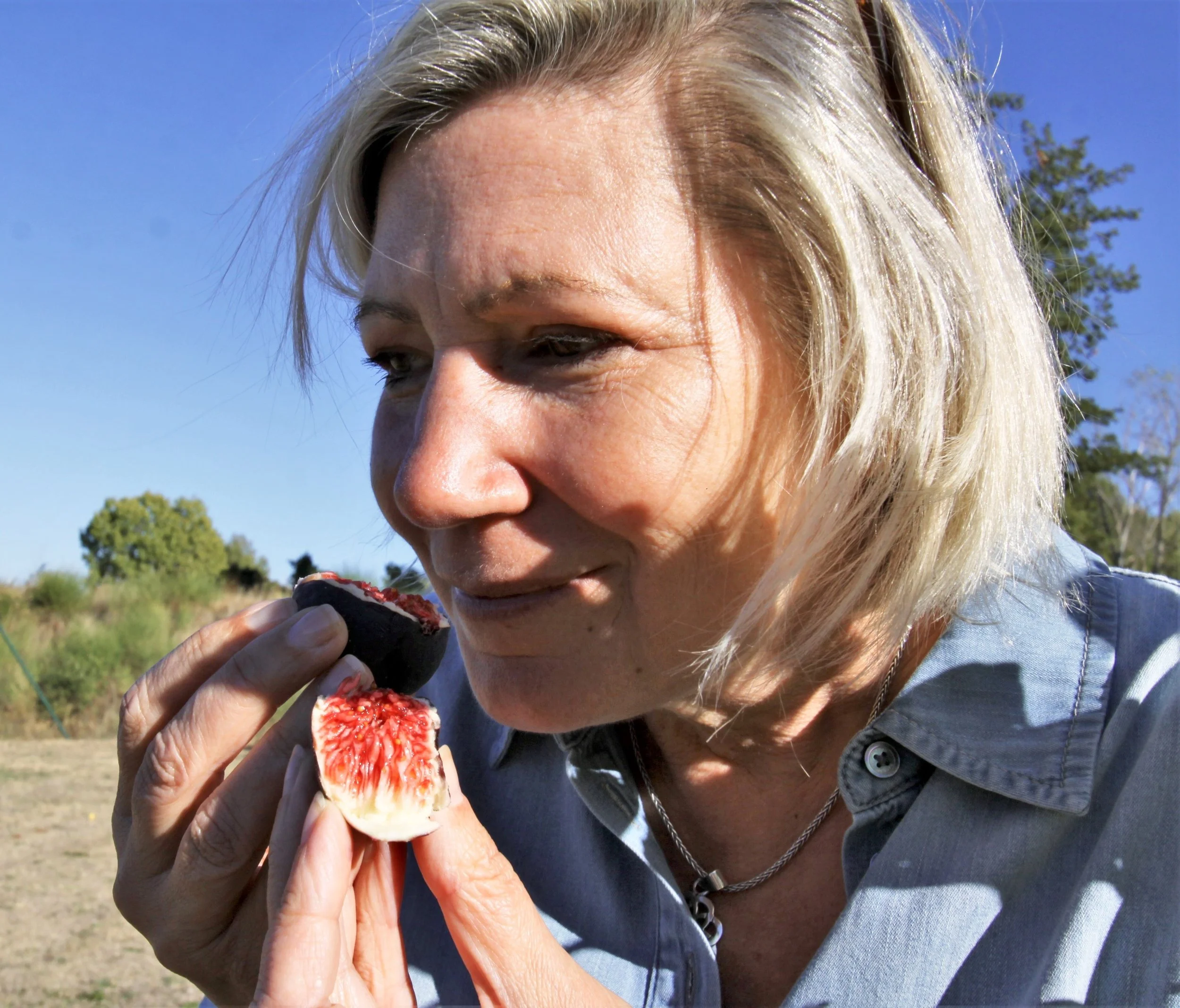
I was alone under that tree, but it didn't feel lonely. There was someone there, unbeknownst to me, taking pictures. Later, looking at them, I felt guarded and a little shy, afraid of what I'd see: myself, caught silly and unguarded, lost in wonder instead of in control. My own face, caught in a delight nobody had arranged. Then came the frisson, goosebumps and a giggle rising before I could stop it. My nose is barely an inch from the fig. My smile is huge. It looks as though I'm a fairy, or a leprechaun, or something extraordinary is going on.
Back in my kitchen, I add tonight's cork to the bowl. It teeters on top of the others, threatening a small champagne-cork Jenga collapse onto the counter I still haven't gotten properly shiny. I leave it right there, already delighting on its behalf, for whoever's hand it finds next, for the wonder it's about to open up in her, the same wonder it opened in me.
Tania Carriere believes the most radical thing a person can do is stay soft in a world that will harden them if they let it. She is a writer, life coach, retreat leader, and TEDx speaker living between Canada, France, and Baja. advivumjourneys.ca