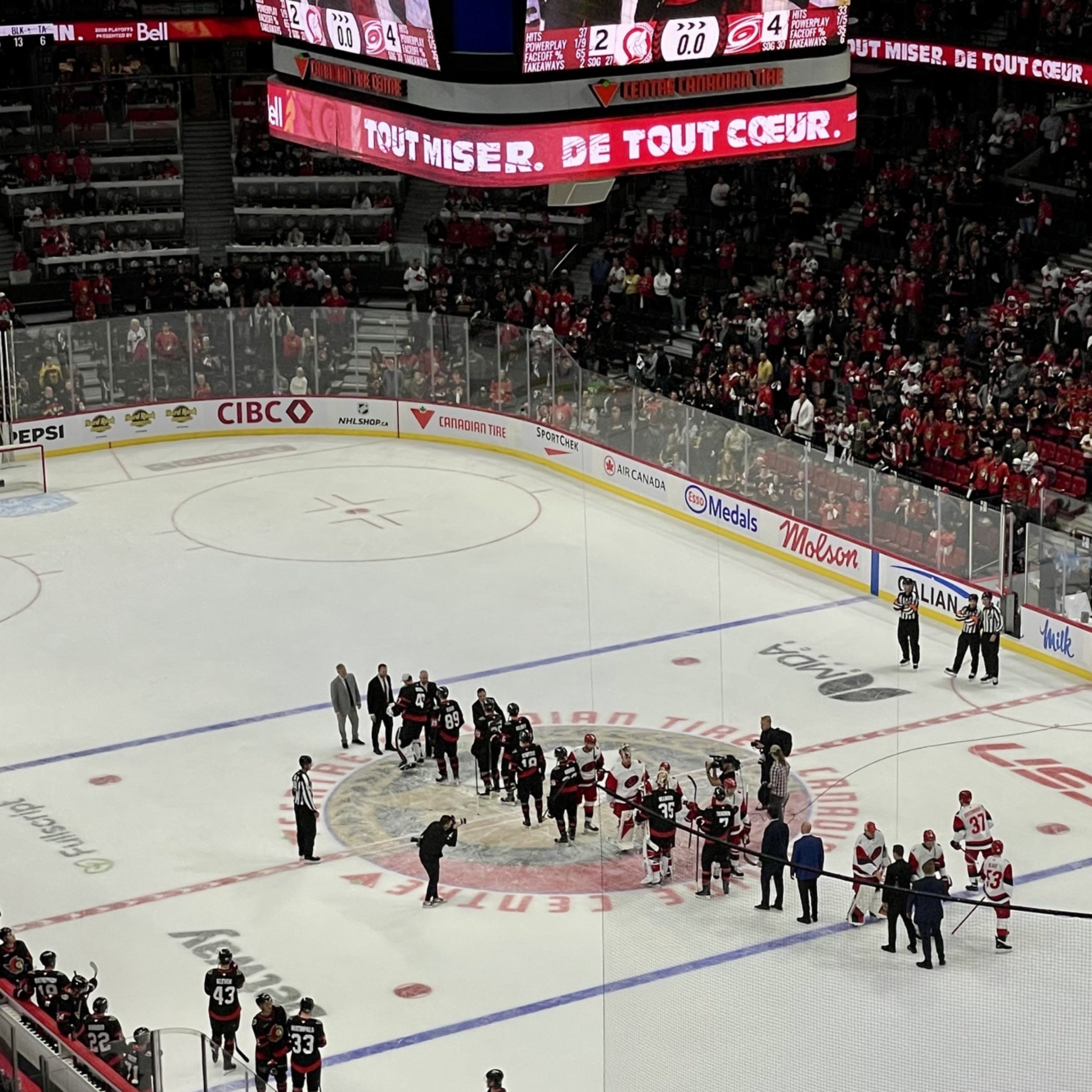
The Final Handshake
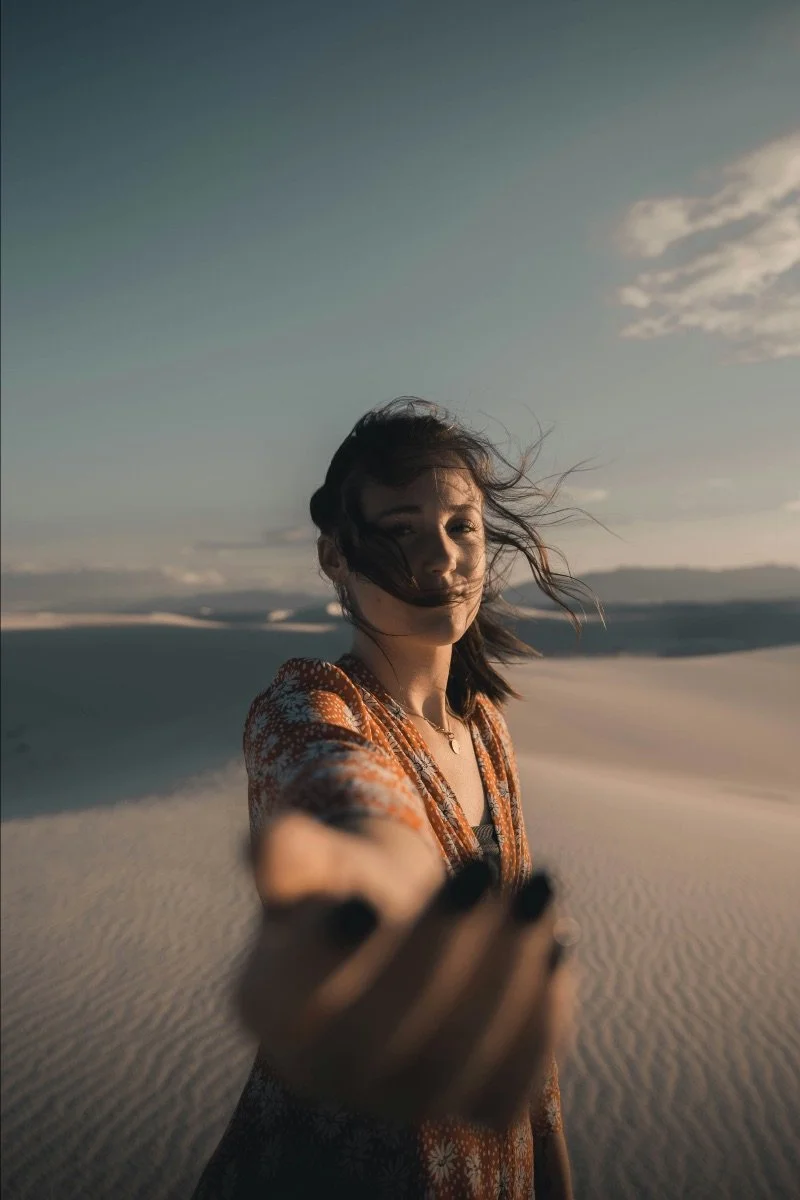
What the line at the end of the game taught me
I feel it first in my solar plexus. A quickening. The ground going unstable beneath me before I understand why. That's the moment every playoff game turns, when hope becomes the underdog.
My brother turned to me and asked, "Do you mind if we stay?"
He sat beside me, wholly present. When he asked, something in me — some five-year-old girl who was always rushed out of the theatre before the credits — smiled.
Of course. This is the most important part of the game.
I have always loved the handshake line. My stepsons and I talked about it around the kitchen table. They were more interested in stickhandling and roughhousing. I was more interested in who they were becoming.
When they came home from a game, their father asked, "Did you score?" Did you win? I always asked something different.
Were you a worthy opponent?
Nobody likes a dirty game. Uneven play cheats the experience for everyone. And in every game, someone loses. The losing is not what marks you. What marks you is whether you can stand in that line — tired, gutted, still burning — and look the other person in the eye. Whether you can hold both your sorrow and your gratitude in the same moment. Whether you can say, with your body if not your words: you were worthy. Without you, I wouldn't have come this far.
I watched my stepsons grow into men who know how to win and lose with grace. Now I know they heard me.
—
Eleven minutes. That's how long the call was. A script. An email that followed — all administration, no warmth, as if we had been a transaction. No warning. No conversation. No: we played this well.
The lights went out in our arena.
Just like that.
She simply left. And I was still on the ice — mid-sentence, mid-tears — with my hand outstretched.
How long do you hold your hand outstretched? How long before your arm understands that no one is coming? And when it finally drops — it doesn't just fall. It feels the blow of the absence — the shock of the void where a person should be.
I replayed every sequence, over and over, looking for the moment I could have moved differently. Did she leave because she didn't care? Or because she didn't know how to stay? I was wrung between those two questions until the memory broke apart the way an over-rehearsed step does, dissolving into twitches, fragments, pieces too small to mean anything anymore. In the end, there was no answer. Only the not knowing.
Saying goodbye well is a skill. Most of us were never taught it. It takes maturity — the ability to hold your own pain without disappearing into it. And it takes enormous courage. The courage to remain present after loss. To not flee into shame or silence or an email. To look someone in the eye and let them see that you are heartbroken too.
When I think of closure, I feel it in my feet first. Long before hockey, before those kitchen table conversations, I was a young ballerina taught to close every step. Close the jump. Close the move. The ending is the moment the audience sees the picture you give them. The ending is what they carry home.
We are never taught how to say goodbye.
We learn the handshake as a recognition of power. Never as a closing ritual. Never as a way to honour what was, to acknowledge that two people showed up fully and made something real. So when it's over, we fumble. We disappear. We send emails. We leave the other person standing in the line, wondering what the score was, whether any of it was real, how long to keep their hand outstretched.
I know what an untidy ending costs.
It cost me my health. Three months of shock, of doubt, of grief so scattered I could barely care for myself. It cost me the clean memory of a love I hadn't caught my breath from. It left me with the lonely work of finding closure on my own.
I took myself back.
There was a hike we used to do together in the early days. Nothing particularly dramatic about it — a desert path, scrubby brush, loose gravel that crunched under my boots. But the first time we climbed it, everything was lit from the inside. The rocks looked interesting. The sand looked golden. My heart was beating from the exertion and from something else — that intoxicating feeling of a love so new it makes even ordinary things shimmer.
I remember sitting at the top with my journal, the stinging heat on my skin, a hot cup in my hand. Looking out at a landscape that was foreign to me, finding my footing in new terrain. Smiling quietly despite the tremor. Despite the wondering: could I do this? Was I enough for this? Could this be the rest of my life?
I could not close this the way I'd been taught — not with a hand extended and met. So I went back to write an ending I could hold. Not a win. Not even peace. I climbed back to give myself the handshake - I see what you gave, I witness you, you were worthy - that no one offered me.
I returned before sunrise. Alone.
I climbed slowly. Peace didn't come. I kept going. I went all the way to the spot where we used to sit. I sat down. I waited. No tears came. No rage. No revelation. Just the early light, the warming rock beneath me, and the quiet.
I held my hand out. Nothing came. She was not going to come.
But I was there. With me.
I turned my back to the view — to see where the earlier version of me had been sitting. The one who didn't know yet. The one still smiling at the shimmer of it all, still whispering to herself: "yes, forever".
"Come on," I said. "Let's go, babe."
And I scooped her up the way you scoop up the most precious five-year-old. Tucked her on my hip. Put her hand on my heart.
"I'm taking you with me."
You gave it everything, sweetheart. Let's go home."
—
How different it might have been if we were taught — from the time we were children at kitchen tables and ballet barres and hockey rinks — that endings deserve as much care as beginnings. That the way you close a thing is the picture you leave behind.
That the final handshake is not a formality. It is not an obligation. It is not the thing you do because someone is watching.
It is the moment where we see the truth behind the play.
Tania Carriere believes the most radical thing a person can do is stay soft in a world that will harden them if they let it. She is a writer, life coach, retreat leader, and TEDx speaker living between Canada, France, and Baja. advivumjourneys.ca