The Dark Matter of My Life
The Dark Matter of My Life
On grief, memory, and learning to navigate by what you cannot see
The home smells of stale urine and cleaning solution, a combination that never stops being a shock no matter how many times I make the four-hour drive. The hallways are too bright to be cheerful. And then there's the cockatoo — someone's idea of comfort, a splash of life — shrieking from its cage near the nurses' station while the rest of us stand around it not knowing what to do with our hands or our faces or our love.
The other visitors have learned to look a certain way: soft-eyed, patient, present. Someone has placed a water bottle carefully at a resident's elbow. Small acts of devotion, everywhere, filling the too-bright air.
I am still learning.
I find her facing the window.
✦
The constellation of her hands.
I take her hands and I do what you do when you want someone to find a constellation: you start with what's brightest.
Age spots, scattered across her knuckles like stars. I trace one with my thumb and the map opens.
These hands scrubbed the bathroom tiles of a motel she ran in a country that was not yet hers, building something from nothing, the way immigrants do — through sheer refusal to stop. These hands rolled cabbage leaves tight as a secret, pressed plum jam through cheesecloth, the recipes arriving with her from the old country in her mind rather than on paper, and now, with her, quietly gone.
These hands pulled me into her chest at the end of every long drive, every homecoming. You're here, they said, without saying anything.
And now they rest in mine — butterfly wing soft, the skin so fine I'm afraid to hold too tight — and for the first time I understand that I am the one doing the holding.
✦
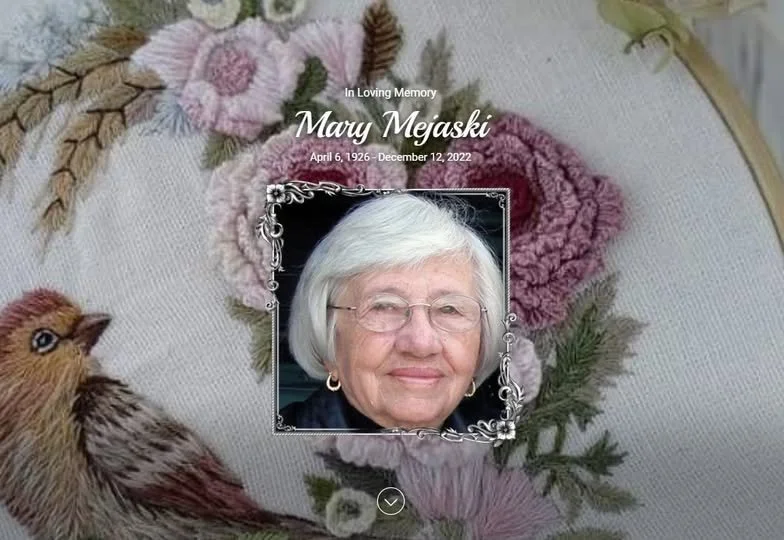
When I look up from her hands, I find her looking back at me — surprised, curious, searching. She can read what's in my face. Love, clearly. Tenderness. Something familiar in the architecture of it. But my name is not there for her.
And then I notice: she has my eyes. Or rather, I have hers. Flecks of green in a deep pool of brown — this same gaze she has looked at in the mirror her whole life, now looking back at her from a stranger's face.
I wait for the fear to arrive. The flinch, the urge to fill the silence with reassurance, to reach for her and pull her back to me. But something else comes instead — something quieter and more spacious than I expected.
I simply fill the space between us with love. The way you'd warm a room before a guest arrives.
She does not need to remember me.
I can greet her with grace.
✦
Baka
She sighed.
The rigidity left her, and with it, the tightness around her eyes, the small held vigilance of someone who has been quietly, exhaustingly lost. I watched her un-brace. Steady herself — not in recognition, but in something older and deeper than recognition. A feeling she knew in her bones even when she couldn't find it in her mind.
She had found me the way you find the sky — not by locating it, but by suddenly realizing you're already inside it.
She leaned forward. A confession, offered the way you offer something you've been carrying too long, hoping to be relieved of it.
"Baka," I said softly. "It's Tania. And I love you."
I need to tell you something true: I'm not certain she said my name back. I think she did. I can hear it, or I think I can hear it — but that could be wishful thinking. The mind that loves her may have slipped it in, the way the mind does when the heart wants something badly enough.
What she did say was this, leaning forward like a confession: "I don't always remember."
She was confessing. And so, without knowing it, was I.
✦
So I told her about her own life.
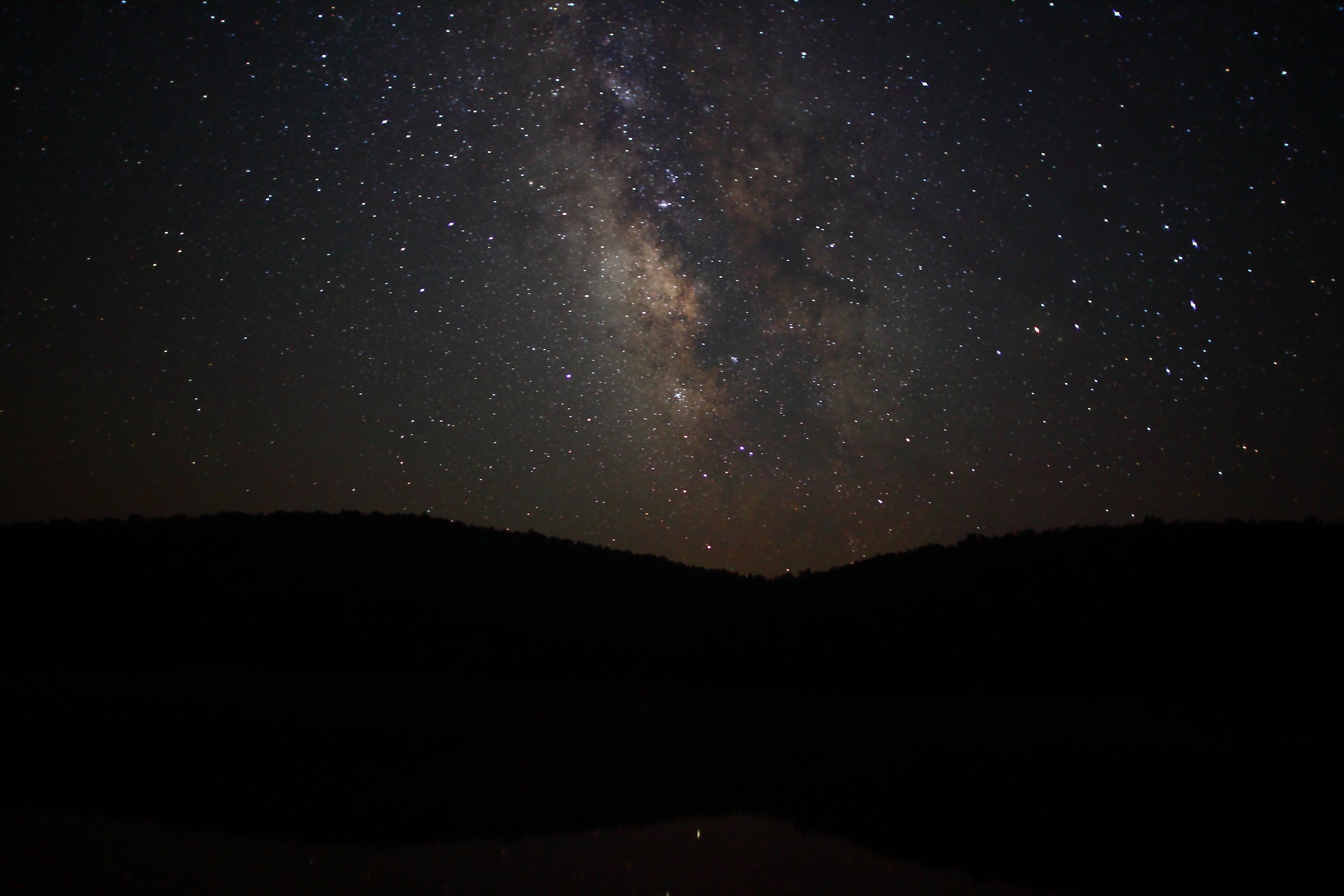
I did what you do when you want someone to find Orion: you start with what's brightest and you trace a line, one point to the next, slowly, giving each one space. The motel. The cabbage rolls. The old country. The hands. I walked her through the great events of her life — not to restore them, but to lay them out like stars across a dark cloth, so she could sense their shape.
With each story, she didn't so much remember as she settled. She relaxed not into the memories themselves, but into the space between them — that deep, dark, velvety space where belonging lives.
This is what I learned in that small room by the window: comfort does not always come from remembering. It comes from knowing that something is there, even when it cannot be seen.

✦
The dark matter of my life.
I walked out of that room carrying everything and I could not name any of it.
Here is what I couldn't say out loud, not even to myself: I was terrified. Not of losing her — I had already been losing her, visit by visit, name by name. I was terrified of what came after. Whether the night sky would actually be enough. Whether I could trust that knowing she was somewhere would be sufficient comfort on the nights I needed to hear her voice, smell her kitchen, feel the specific weight of her pulling me in from the cold.
Can you trust a metaphor when what you want is a person?
I didn't know. I still don't, entirely.
And here is something I didn't know until I sat down to write this, four years after I buried her: just last week I told someone that I hadn't really experienced the trauma of death. My grandmother, yes, but she was in her nineties. Expected. Different.
I believed that when I said it.
I wonder now about the things we cannot look at until we are ready. The grief so large we walk around it for years, calling it something else — acceptance, perspective, maturity — not realizing we are describing the size of what we're avoiding.
She died four years ago. I think I am only just now walking into the room.
✦
Grief, in its most acute form, is the sudden loss of a star you have always navigated by. You look up and find dark where there was once light, and the world tilts. You do not know which direction is home.
But here is what she showed me, in that small room by the window, her butterfly-wing hands in mine:
The stars do not disappear when clouds cover them. They are there — vast, ancient, burning — whether our eyes can find them or not. The deep dark of space is not emptiness. It is where the most interesting things live: the force that holds galaxies together, the unseen matter that makes up most of what is real.
My grandmother is now the dark matter of my life. Invisible, immense, essential. Her hands, her accent, her particular way of making everything feel survivable — these live in the way I reach for my own children, in the stories I tell at tables, in the warmth I try to extend to strangers.
She has become part of the permanent map.
The North Star does not have to be visible to remain north.
✦
I look for her in the dark.
And I trust that she is there — burning, somewhere beyond my sight, part of the constellation that has always told me who I am and where I come from.
Connected. Starlit. Never lost.
✦
If you are carrying a grief — one that arrived early, or one that has landed fully, or one you didn't even know you were carrying until you sat down quietly enough to feel it — I hope you find a clear night and look up. Not for answers. For company.
You are inside something that holds you, whether you can feel it or not.