Rituals Instead of Resolutions
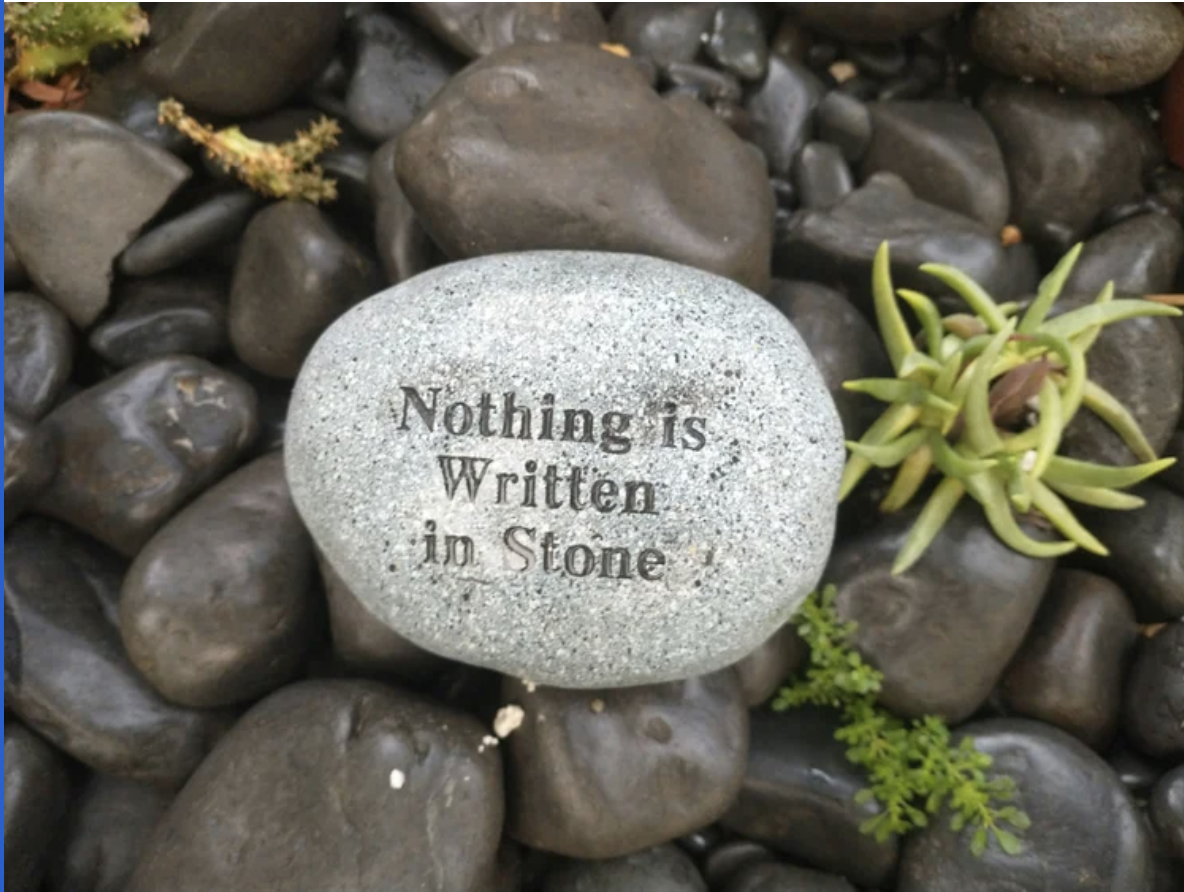
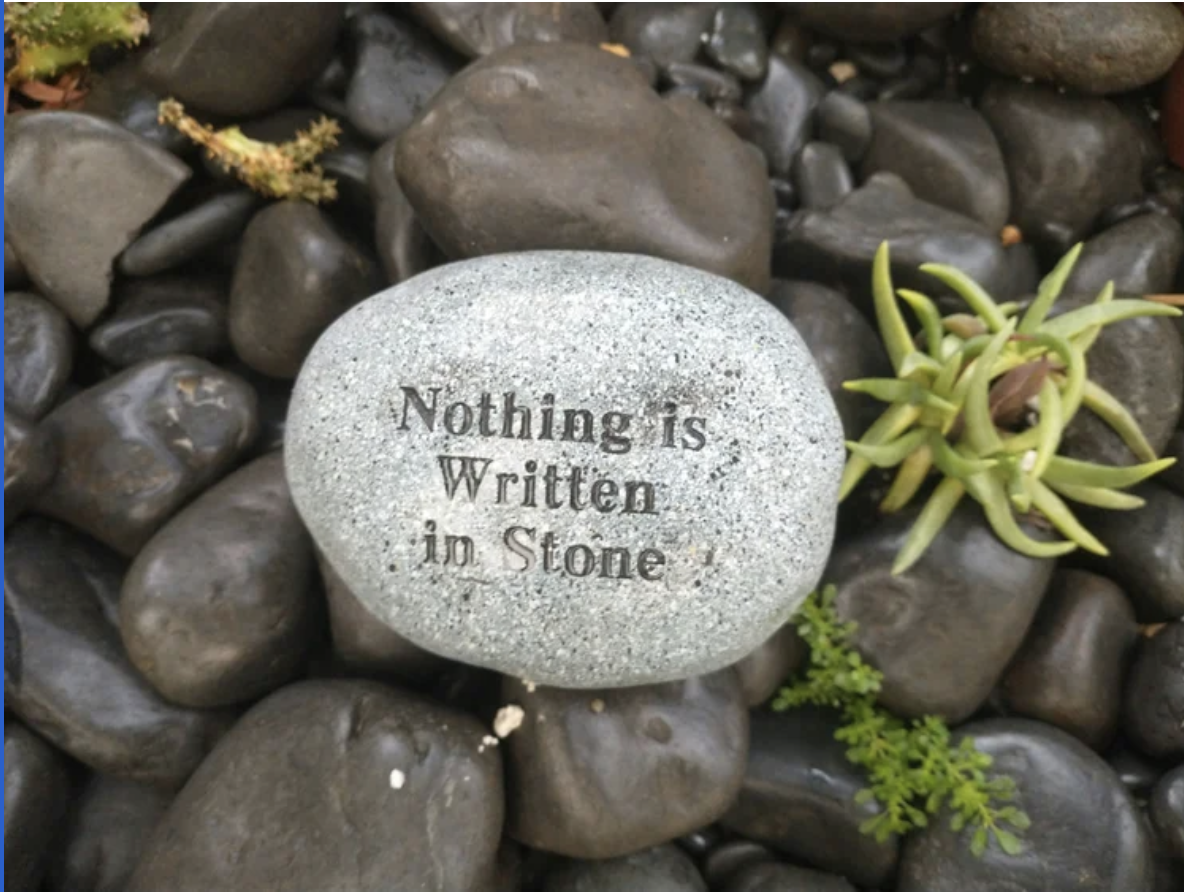
I'm sitting in a circle of women at a winter solstice gathering, candles flickering shadows across their faces. Someone is passing around a woven basket filled with smooth river stones, and I can hear the soft click of them shifting as it moves from hand to hand. "Choose a stone and write one word on it—one word to capture your resolution for the new year," the facilitator says, her voice warm with encouragement.
Around me, people are already reaching for pens. I watch a woman across the circle write "courage" in careful letters. Another closes her eyes for a moment, then writes something I can't see. Faces bright with possibility, with that particular hopefulness that comes at the turning of the year.
I pick up a stone. It's cold and heavy in my palm, worn smooth by water and time.
And suddenly I'm aware of a tightness in my chest, a familiar knot in my jaw. Fifty-odd years of intentions and resolutions are sitting on this stone with me. All those abandoned diets, failed promises to be a better daughter, the goals to release my creative side set with such hope and somehow... forgot. Or ignored. Or laughed about later when life asked me to learn the same lesson all over again.
The woman next to me has already finished writing hers. Mine sits blank.
This is when I realize: I don't want another resolution. I want something else entirely.
This year has been an immersion for me in the power of creating rituals. The most powerful learning was gifting myself the permission I thought I needed to create my own ritual. Not what worked for others or what is prescribed by some other authority, but something that will work for me. In my case, it means something that matches my nomadic lifestyle, that brings peace and hope to the start of my day, and doesn't feel like a burden.
The Resolution That Broke Me (Gently)
This year, the most important ritual turned out to be the simplest thing. But not before I set lofty goals and berated myself for them first.
I resolved to put myself back on my priority list. I wanted to break the habit of getting out of bed and immediately turning to my warm coffee, my emails, my to-do list. I remember a time when I reserved the first hour of every day to read and luxuriate in being still and at ease. Somewhere along the way, urgency had replaced ease, and I wanted it back.
So I did what all the best people seemed to be doing—I created an elaborate morning routine. Out went the coffee, replaced with a virtuous cup of water and lemon. In came a timer for twenty minutes of contemplation after lighting the fifteen new candles in the candelabra. Then thirty minutes of spine-twisting yoga. And finally, fifteen minutes of journal writing.
I even bought new candles. Fancy ones. As if the right aesthetic would somehow make me into the kind of person who could sustain this level of performance art before breakfast.
It lasted three days.
On day one, I couldn't find the lighter for the candles. On day two, I was in a hotel room in Quebec City with a smoke detector that eyed my candelabra suspiciously, and I realized I'd forgotten to pack half my supplies anyway. On day three, I woke up in my own bed, finally, with everything I needed—and felt a wave of resentment at the whole production before I'd even opened my eyes.
The resolution was beautiful in theory. It was also completely unsuited to my life, to my body, to the reality of waking up in different cities and time zones with different levels of energy and need. I had created a monument to someone else's morning routine and was trying to worship at it daily.
So I let it collapse. And then, because I'm apparently committed to feeling like a failure, I spent the next week beating myself up about it. Another abandoned resolution. Another example of me not being disciplined enough, committed enough, enlightened enough. Look at all those Instagram wellness influencers with their morning practices—why couldn't I be like them?
Until one morning, I just... stopped.
What Remained
In the rubble of my failed resolution, I missed the stillness. Not the candelabra or the timer or the regimented sequence, but simply the experience of meeting myself before I met the world.
And in that realization was a question: what if I stopped trying to do it "right" and simply asked myself what I actually needed?
The answer was almost embarrassingly simple. Before I picked up my phone, before I opened my laptop, before I began producing or doing or responding, I would gift myself ten minutes of being.
Not meditating. Not journaling. Not achieving anything at all. Just being with a cup of something warm—coffee, more often than not—looking out whatever window I found myself near, and allowing my mind to wander where it needed to go.
The first morning I tried this, I was back in a hotel—this time in Victoria, with rain streaking the window and the dark outline of cedars against a grey sky. I was exhausted from travel, wearing the hotel bathrobe, hair unbrushed. I made terrible hotel coffee in the little machine and sat on the edge of the bed with the cup warming my hands.
I didn't time it. I didn't light anything. I just sat there and watched the rain and let my mind spin through its usual catalogue of worries and plans.
And then, maybe seven or eight minutes in, something shifted. My shoulders dropped. My breath deepened. I noticed the particular smell of wet cedar coming through the cracked window. I felt, for just a moment, like I had arrived in my own life instead of racing ahead of it.
It wasn't transcendent. It wasn't even particularly peaceful. But it was real. And it was mine.
Some mornings now, this looks like watching the light change on a wall. Some mornings, it's noticing the sound of a distant highway or the hum of a hotel air conditioner. Some mornings, my mind spins through my worries and plans, and I let it. I don't force stillness; I just claim the time for it to arrive if it wants to.
This, I discovered, is a ritual.
When Your Body Learns the Ritual
Here's what surprised me most: after a few weeks of these simple mornings, my nervous system started to respond on its own accord. I no longer had to tell it to "relax." It knew the moment. The warmth of the cup in my hands, the deliberate pause before reaching for my phone—these became cues for my body to sink into itself and down-regulate.
And once that foundation was there, once my system trusted that this time was mine, I found I could add small elements that gave me comfort. A tea light candle on mornings when I was home—the act of lighting it made me feel special, celebratory, like I was creating a small ceremony just for me. An inspirational song playing softly while I looked out the window. Not because I needed these things to make the ritual "work," but because they naturally wanted to be part of it.
This is how rituals grow differently from resolutions. Resolutions expand through willpower and discipline—you force yourself to add more, do more, be more. Rituals expand through invitation—your body asks for what it needs, and you listen. The tea light wasn't on my list of "things I should do." It just appeared one morning because something in me wanted that small, steady flame. The ritual was teaching me to trust my own knowing.
Why a Resolution Feels Heavy and a Ritual Will Lift You Up
So what's the difference, really?
Resolutions are about fixing what's broken. They carry this implicit judgment: you're not enough as you are, so you need to become something else. They live entirely in the future—in the person you'll be once you've completed thirty days of yoga or written in your journal every morning or finally mastered the art of early rising. And because they live in the future, they also live in failure, because the present moment is always falling short of that idealized version ahead.
I know this because I've lived it. Every January, I'd promise myself this was the year I'd become the kind of person who meditates daily, exercises before work, drinks green smoothies. And every February, I'd quietly abandon ship and pretend I'd never made those promises in the first place.
Rituals are different. They're about remembering what matters, not correcting what's wrong. They live right here, in the present moment, in the actual doing of the thing. A ritual doesn't ask you to be transformed—it asks you to show up. And in that showing up, again and again, transformation happens almost by accident, as a side effect rather than the goal.
Resolutions require willpower—that exhaustible resource we're all trying to conserve. Rituals create a container that holds you. They work with the grain of your life, not against it.
My morning ritual doesn't require me to be disciplined or motivated or "on." It only requires me to pause before I begin. And because it's so simple, so undemanding, I can do it anywhere: in a hotel room, in a friend's guest room, in my own home, in an airport lounge at dawn. It travels with me. It doesn't need equipment or perfect conditions. It just needs me to remember that I'm worth those ten minutes.
What Makes a Ritual
After a year of experimenting, here's what I've learned:
Rituals have repetition, but not rigidity. They return, but they're allowed to shift and breathe. My ten minutes might be with coffee one day and tea the next. By a window or curled on a couch. The specifics don't matter—the intention does.
They engage the senses and body, not just the mind. There's something about the warmth of the cup in my hands, the steam rising, the particular quality of morning light that makes this more than just "thinking time." My body knows this is the ritual. My nervous system responds.
They mark transitions or create sacred pauses in ordinary time. My ritual is the bridge between sleeping and waking, between my inner world and the outer world. It's the threshold I cross, every day, that says: I matter before my productivity matters.
They work with your life, not against it. This might be the most important discovery. The candelabra morning was someone else's ritual that I tried to import wholesale into my life. It didn't fit. My ten minutes of window-gazing fits because it was designed for my constraints, my needs, my nomadic reality.
How to Create a Ritual of Your Own
If you're tired of resolutions that feel like assignments, if you're ready to try something that might actually sustain you, here's what I'd offer:
(And yes, I know this might sound impossibly precious or self-indulgent. Ten minutes? Really? I get it. I used to think the same thing. But here's what I've learned: those ten minutes aren't selfish—they're the foundation that makes everything else possible.)
Start with what you're craving, not what you think you should do. I craved stillness and ease. What are you actually hungry for? Not what would make you a "better person" according to someone else's definition, but what would make you feel more like yourself? I wasted years trying to want what other people wanted—to be the kind of person who loves 6am workouts or keeps an immaculate bullet journal. Turns out, I'm not that person. And that's okay.
Look at your constraints, not around them. I used to think my travel schedule was the problem. Now I see it as the design parameter. What are your constraints? Limited time, unpredictable schedule, small children, a mind that resists sitting still? Design for those realities.
Make it small enough to be undeniable. Ten minutes. One conscious breath. Three pages. Whatever it is, make it so small that you can't talk yourself out of it, even on the worst days.
Let it be imperfect. Some days, I pick up my phone first, and the ritual happens twenty minutes later than planned. There was an entire week in November where I forgot completely—not because I was travelling, but because I was tired and overwhelmed and defaulting to old patterns. When I remembered again, I didn't berate myself. I just came back. That's what rituals allow: return without penalty.
Give yourself permission to create your own. You are the authority on your own life. You know what brings you peace. Trust that knowing.
The Days Are Getting Longer
Here's what I've noticed since I traded my resolution for a ritual: I'm kinder to myself. Not because I'm achieving more or doing better, but because I'm meeting myself every morning with gentleness instead of demands. I'm saying, with those ten minutes: you're worth this pause. You matter before you produce. You deserve to arrive at your day instead of being ambushed by it.
And slowly, almost imperceptibly, other things have shifted too. I'm more present with the people I love. I'm more creative in my work. I'm less frantic, less scattered, less at the mercy of every urgent thing demanding my attention. My nervous system has learned that it's safe to pause, and that lesson has rippled out into the rest of my life.
Not because I'm enlightened now. Not because I've mastered morning routines or achieved some peak state of wellness. But because I created a ritual that actually fits my life, and I keep returning to it.
The days are getting longer, yes. Each one carries a gift of returning light. But the real gift isn't more light—it's learning to meet the light that's already here. And each morning, I give myself the gift of greeting that light before I turn to anything else.
Maybe that's all a ritual needs to be: a way of saying yes to yourself, again and again, until the yes becomes as natural as breathing.
And if anyone asks why I'm more grounded, more present, less frantically productive and more deeply alive, I'll tell them the truth:
I stopped trying to be the woman I thought I should be and created space for who I actually am.
Ten minutes at a time.
What permission have you been waiting for that you could give yourself right now? What would your morning—or your life—look like if you designed it for who you actually are, not who you think you should be?
Creating Your Own Rituals
If this resonates with you—if you're tired of resolutions that feel like punishment and hungry for practices that actually sustain you—I'd love to support you in that exploration.
I work with people who are ready to design lives that fit who they actually are, not who they think they should be. Sometimes that happens in one-on-one coaching, where we create the space to uncover what you're really craving and design rituals, practices, and ways of being that honour your constraints instead of fighting them.
And sometimes it happens on retreat, where you get to step away from the urgency of daily life and settle back into what it feels like to move at your own pace, to listen to your own wisdom, to return to yourself.